
Critical Steps: 2026 Small Business EOFY Checklist
Follow our 2026 small business eofy checklist to secure family trust resolutions, verify asset write-offs, and clear urgent accounting compliance.

The close of the 2025–26 financial year brings both immediate compliance requirements and shifting operational horizons for Australian small businesses. With recent Federal Budget proposals introducing significant discussion around a permanent $20,000 instant asset write-off and future adjustments to entity taxation, maintaining absolute clarity over your corporate records is vital. While these broader structural updates are heavily discussed, they are largely proposals scheduled for future financial years and are not yet law. Your immediate priority right now must remain focused on maximizing the definitive, current-year deductions and protections available under existing legislation.
While the official end of the financial year lands on 30 June 2026, waiting until the final week eliminates your room to move. Realistically, 15 June 2026 serves as your strategic deadline. Acting by mid-month ensures bank transfers physically clear, complex corporate documentation is legally executed, and software-driven compliance changes run smoothly. Implementing proactive tax accounting solutions before this critical window shuts is the single most effective way to protect your entity’s cash flow.
2026 Small Business EOFY Checklist: Step-by-Step
Meeting the Tight 30 June Legal Cutoff
To successfully navigate the end of the financial year without exposing your business to severe compliance penalties, your accounting frameworks must be cross-checked against standard Australian Taxation Office (ATO) milestones. Treating 30 June as a single operational task frequently leads to processing logjams, system failures, and missed deductions. Instead, dividing your compliance obligations into structured, time-sensitive action pieces allows your entity to process adjustments methodically.
Applying a strict 2026 small business eofy checklist requires looking past basic data entry and prioritizing the legal documentation that underpins your numbers. Every asset adjustment, private company reimbursement, and expense acceleration must be fully supported by clear contemporaneous records. If an asset purchase or corporate minute lacks the necessary paper trail prior to midnight on 30 June, the associated tax advantage cannot be legally claimed on your upcoming business return. For comprehensive corporate entity management, you can lean directly on our targeted accounting and tax services pillar to align your records before the cutoff.
Compliance Area
Target Buffer Date
Hard Legal Deadline
Primary Risk of Non-Action
Trust Distribution Minutes
15 June 2026
30 June 2026
Income taxed at top marginal rate (47%)
Division 7A Cash Clearances
15 June 2026
30 June 2026
Deemed unfranked taxable dividend assessment
Instant Asset Write-Off Setup
20 June 2026
30 June 2026
Deduction pushed into next financial year
Prepaid Expense Processing
15 June 2026
30 June 2026
Loss of immediate current-year tax reduction
Bad Debt Ledger Write-Offs
25 June 2026
30 June 2026
Paying tax on unrecoverable book revenue
Ready to check off your year-end tasks with complete confidence?
Let’s map out your smooth, stress-free path to June 30 together.
Finalising Discretionary Family Trust Resolutions
Securing Valid Allocations to Avoid Default Assessments
If your small business or investment structure operates via a discretionary family trust, the physical preparation and signing of your annual distribution resolution is your most time-sensitive requirement. Under long-standing ATO rulings, a trust’s net income is taxed based on how it is allocated to beneficiaries. For these individuals or corporate entities to be deemed “presently entitled” to the trust’s profits for the 2025–26 year, the written minute must be fully executed on or before 30 June 2026. Reviewing our comprehensive breakdown of the 5 keys to trust distribution resolutions will help you establish compliant frameworks before this processing window closes.
Failing to pass a valid resolution before midnight on 30 June leaves the trust’s net income legally undistributed. When this occurs, the default clauses within your specific trust deed are triggered, or worse, the entire unallocated profit pool is assessed directly to the trustee. Under Section 99A of the Income Tax Assessment Act, the ATO is legally mandated to tax undistributed trust income at the highest marginal rate, which currently stands at 47%.
Sample Calculation: The ‘Dry Tax’ Scenario
- Trust Net Taxable Income: $150,000
- Scenario A (Valid Minute signed 15 June): Profits distributed across three family beneficiaries on lower brackets. Total Group Tax: ~$18,500.
- Scenario B (Resolution missed/signed 2 July): No present entitlement exists on 30 June. Income assessed to Trustee under Sec 99A at 47%. Total Group Tax: $70,500.
- Net Financial Loss due to timing error: $52,000.
The ATO continues to maintain strict compliance audits regarding Section 100A, focusing heavily on arrangements where trust income is systematically allocated to low-tax beneficiaries on paper, while the physical cash remains inside the business or benefits a completely separate party. To ensure your resolutions withstand deep regulatory scrutiny, your distributions must conform precisely to official ATO Section 100A guidance protocols, align with the definition of “income” outlined in your trust deed, and be securely stored in your corporate minutes repository.
Reviewing Company Loans and Division 7A Compliance
Managing Shareholder Repayments Under Strict ATO Scrutiny
For small businesses operating through a proprietary limited company structure, monitoring transactions between the entity and its shareholders or associates is an active compliance priority. Division 7A of the Income Tax Assessment Act is specifically designed to prevent business owners from accessing corporate profits tax-free without paying standard individual marginal rates. Any cash withdrawals, direct personal payments, or uncommercial loans taken from the company during the year risk being classified as unfranked, taxable dividends.
To prevent private drawings from triggering an automatic tax event, these amounts must either be fully repaid to the company or formalised into a compliant Division 7A loan agreement before the company’s tax return lodgement deadline. For existing Division 7A loans already established in prior financial years, the business must ensure that the strict Minimum Annual Repayment (MAR)—which comprises both principal and an ATO-set benchmark interest rate—is physically cleared through the company’s bank account by 30 June 2026.
Division 7A Minimum Annual Repayment Formula
The standard statutory formula utilized to determine required annual principal and interest repayments on outstanding private company loan structures:
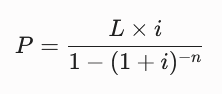
Where:
- P = The Minimum Annual Repayment amount
- L = The balance of the loan at the end of the previous income year.
- i = The benchmark interest rate for the current income year.
- n = The remaining term of the loan (in years).
When executing these repayments, small business owners must avoid using journal entries as a substitute for actual cash movement unless those entries are backed by verified, declared dividends. The funds must physically move out of the individual’s private account and land in the company’s operating account. Relying on late transfers on 30 June runs a severe risk of processing delays, meaning the transaction may not clear in time, resulting in an immediate breach of Division 7A rules.
Capitalising on the Permanent $20,000 Instant Asset Write-Off
Verifying Delivery and Operational Readiness Specifications
As part of small business support frameworks, the $20,000 instant asset write-off provides an exceptional cash flow management tool, allowing your business to immediately deduct the full cost of depreciating plant, equipment, commercial vehicles, and office technology valued under $20,000 (excluding GST). This threshold applies strictly to eligible businesses with an aggregated annual turnover of less than $10 million and operates on a per-asset basis, meaning your business can purchase and write off multiple independent assets during the same financial year.
However, the legal criteria for claiming an immediate deduction depends entirely on a concept known as “operational readiness.” The ATO mandates that for an asset to be written off in the 2025–26 tax return, it must be first used, or physically installed ready for use, for a taxable purpose between 1 July 2025 and 30 June 2026. Small business owners can verify active structural eligibility criteria via the official Australian Taxation Office instant asset write-off portal to ensure compliance before completing capital expenditures.
Operational Readiness Case Study
- Fact Pattern A: A business owner orders a $15,000 manufacturing tool online on 24 June 2026. The invoice is paid instantly. Due to shipping delays, the tool arrives at the factory on 3 July 2026.
- Tax Outcome: The item cannot be claimed as an instant asset write-off for 2025–26 because it was not ready for use on-site by 30 June. The deduction is deferred to 2026–27.
- Fact Pattern B: The same business owner purchases the tool in-store on 15 June 2026, brings it to the workspace, plugs it in, and runs a calibration test.
- Tax Outcome: The $15,000 deduction is fully captured in the 2025–26 financial year, delivering an immediate cash flow reduction on the upcoming tax assessment.
Assets costing $20,000 or more cannot be written off instantly. Instead, they must be seamlessly placed into your business’s simplified depreciation pool. Under these rules, pool assets are depreciated at a rate of 15% in their first income year, and 30% for each subsequent financial year. Furthermore, if your total general small business pool balance falls below $20,000 at the absolute end of the financial year, the remaining balance can be completely wiped out as an immediate deduction.
Prepaying Predictable Business Operating Expenses
Accelerating Deductions to Support Year-End Cash Flow
Small businesses utilizing simplified tax systems have the legal right to bring forward deductions into the 2025–26 financial year by prepaying up to 12 months of upcoming operating costs. This strategy allows an entity to deliberately manage its taxable profit margins by funding predictable expenses ahead of schedule. Balancing individual capital gains events alongside these commercial outgoings requires a highly integrated plan, particularly if you are also managing personal property transformations covered under the inherited home CGT main residence exemption framework. To qualify for an immediate current-year business deduction, the prepayment must cover a period that does not exceed 12 months, and the underlying service must be fully completed before the close of the next financial year.
This approach is highly effective when applied to unavoidable, fixed overheads that your business would otherwise pay incrementally month-by-month. Typical examples of deductible prepayments include commercial building rent, comprehensive business insurance policies, professional memberships, software-as-a-service (SaaS) subscriptions, and interest on business loans or equipment finance.
Prepayment Efficiency Analysis: Cash Flow Optimization
Without Prepayment Strategy:
- Projected Taxable Income: $180,000.
- Standard Small Business Tax Rate (25%): $45,000.
- Net Retained Business Cash: $135,000.
With Strategic Prepayment (Executed before 15 June):
- Prepayment of 12 Months Commercial Rent: $24,000.
- Prepayment of Annual Software & Insurance: $6,000.
- Total Accelerated Deductions: $30,000.
- Adjusted Taxable Income: $150,000.
- Revised Business Tax Bill (25%): $37,500.
- Immediate Cash Kept in Business: $7,500
Checklist: Key Considerations for SMSF Trustees
[ ] Reviewing Trust Deed: Confirming the definition of “income” and checking your streaming rules.
[ ] Contemporaneous Execution: Ensuring all trustees sign and date the minute on or before 30 June 2026.
[ ] TFN Reporting: Verifying that all new beneficiaries have provided their Tax File Numbers to the trustee.
[ ] Section 100A Compliance: Confirming that entitlements will result in a physical cash benefit to the beneficiary rather than being diverted.
[ ] Finalizing Asset Write-offs: Formally writing off unrecoverable debts or obsolete stock in the ledger before the June 30 deadline.
Conclusion: The Importance of Proactive Documentation
The shift toward the current tax regime represents a move away from passive trust management. As the
Waiting until the next financial year to address these resolutions may result in missed opportunities to distribute income to lower-taxed beneficiaries or establish a more favorable tax position. Whether it involves reviewing your trust deed or securing digital signatures, the actions you take now will define the tax efficiency of your structure for years to come. In an environment of increased oversight, clear documentation is your best defense.
Take the guesswork out of your year-end numbers.
Reach out to our friendly team today to secure your cash flow before the rush.